
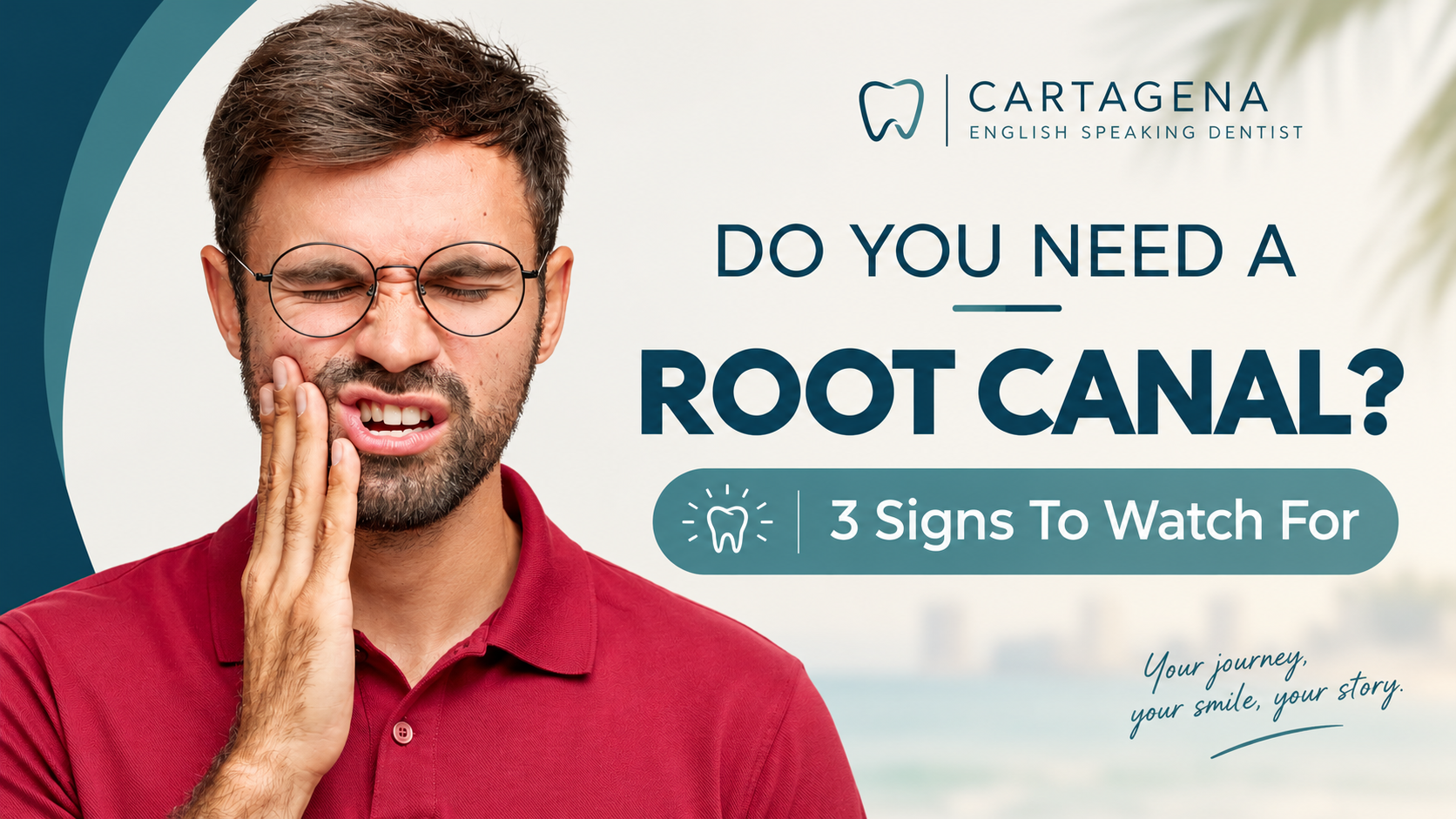
Are you experiencing tooth pain or sensitivity? Knowing the signs you might need a root canal can help you understand when it’s time to see a dentist. Lingering sensitivity to hot or cold, pain when chewing, and swelling around a tooth may indicate an underlying dental problem that needs attention.
Whether you live in the United States or Canada or are planning a visit to Cartagena, Colombia, understanding these warning signs can help you make informed decisions about your dental health. In this guide, Cartagena English Speaking Dentist explains three symptoms you shouldn’t ignore, what they may mean, and when to seek a professional evaluation.
But first, what Is a Root Canal?🤔
A root canal is a dental procedure used to treat inflammation or infection inside a tooth. The dental pulp contains nerves and blood vessels. If it becomes irreversibly inflamed or infected, root canal treatment may be necessary to relieve symptoms and help preserve the natural tooth.
During treatment, the affected pulp is removed, the inside of the tooth is cleaned and disinfected, and the root canal space is filled and sealed. Depending on the condition of the tooth, a dental crown may be recommended afterward to protect it and restore its function.
Recognizing possible warning signs early can help you seek appropriate care before the problem becomes more complicated.
1. Tooth Sensitivity That Lingers After Hot or Cold Foods and Drinks

Have you ever taken a sip of hot coffee or a cold drink and felt a sharp sensation in one tooth that continues even after you stop drinking?
Brief sensitivity can have several causes, including exposed dentin, gum recession, or a small area of tooth decay. However, sensitivity that lingers after the hot or cold stimulus is removed can sometimes indicate inflammation of the dental pulp.
Pay attention if you notice:
- Pain that continues after eating or drinking something hot or cold.
- Sensitivity that seems to come from one particular tooth.
- Episodes of discomfort that become more frequent or intense.
- Tooth pain that begins without an obvious trigger.
These symptoms do not confirm that you need a root canal, but they are worth having evaluated by a dentist. An examination and, when appropriate, dental X-rays can help identify the underlying cause.
2. Pain When You’re Biting or Chewing

Does one tooth hurt when you bite into food or chew on a particular side of your mouth?
Pain when biting or chewing can have several possible explanations. These include a cracked tooth, a damaged filling, inflammation around the root, or an infection. In some cases, it may be associated with a tooth that needs root canal treatment.
Consider scheduling an evaluation if you experience:
- Sharp pain when biting down.
- Discomfort that repeatedly affects the same tooth.
- Pain when releasing your bite.
- Tenderness that makes it difficult to chew comfortably.
Avoid repeatedly testing the painful tooth by biting down on hard foods. A dentist can examine the tooth, assess your bite, and determine whether additional testing or imaging is needed.
The sooner you can identify the cause, the sooner you can understand which treatment options may be appropriate.
3. Swelling or Tenderness Around your Tooth
Swelling or tenderness around a tooth is another symptom that should not be ignored.
When bacteria reach the inner tissues of a tooth, an infection can sometimes develop and spread into the surrounding tissues. This may cause swelling, tenderness, or a small pimple-like bump on the gum near the affected tooth.
Other possible warning signs include:
- Swelling in the gum around a tooth.
- Tenderness when touching the area.
- A persistent unpleasant taste or drainage near the tooth.
- Increasing discomfort or pressure around the affected area.
These symptoms may indicate a dental infection and require prompt professional evaluation.
Seek urgent dental care if you notice swelling. If you develop facial or neck swelling, fever with worsening symptoms, or difficulty opening your mouth, seek urgent medical or dental assessment. Difficulty breathing or swallowing, or rapidly spreading swelling, requires emergency medical care.
Do not assume that an infection has resolved simply because the pain decreases. A dental infection may still need treatment even when symptoms temporarily improve.
Does Having These Symptoms Mean You Definitely Need a Root Canal?
No. Having one or more of these symptoms does not automatically mean you need root canal treatment.
Tooth sensitivity, pain when chewing, and swelling can be associated with different dental conditions. Depending on the cause, treatment might involve a filling, a crown, treatment for a crack, gum treatment, root canal treatment, or another appropriate procedure.
To determine what is happening, your dentist may:
- Ask about your symptoms and when they started.
- Examine the affected tooth and surrounding gums.
- Perform appropriate tests to assess the tooth.
- Recommend dental X-rays when indicated.
The goal is to identify the cause of your symptoms and recommend treatment based on your individual needs.
What Happens If You Need a Root Canal?
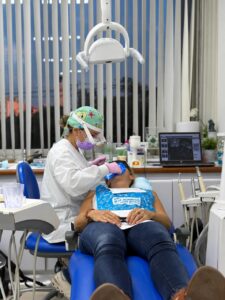
If your dentist determines that root canal treatment is necessary, the procedure is generally performed using local anesthesia to keep you comfortable.
The dentist or endodontist accesses the inside of the tooth, removes the affected pulp, cleans and disinfects the root canal system, and seals it. The tooth is then restored, sometimes with a crown, depending on how much healthy tooth structure remains and the tooth’s location and condition.
Modern root canal treatment is intended to relieve problems caused by an inflamed or infected pulp and preserve the natural tooth whenever possible.
Your dentist can explain the expected treatment steps, the number of appointments, and the restoration you may need after the procedure.
Looking for a Dentist in Cartagena, Colombia?

If you are experiencing tooth pain and are visiting Cartagena, Colombia, it is important to have your symptoms evaluated rather than trying to diagnose the problem yourself.
At Cartagena English Speaking Dentist, Dr. Rodriguez and the dental team help English-speaking patients understand their dental concerns and explore appropriate treatment options.
If you are planning a visit to Cartagena and already have tooth pain, recent dental X-rays and any previous dental records can be helpful when arranging an initial consultation. They may help the dental team understand your situation, although an in-person examination may still be necessary to determine the appropriate treatment.
We welcome your questions and can help you understand the next steps for your dental care.
Contact Cartagena English Speaking Dentist to ask about an appointment or consultation.
Affordable Dental Care and a Mini Vacation in Cartagena

For patients like you, traveling from the United States or Canada, exploring root canal treatment in Cartagena, Colombia, may offer an opportunity to save on dental care while enjoying a change of scenery. Treatment costs can be lower than those in North America, although your actual savings will depend on the treatment required, your travel expenses, and the number of appointments needed. With its Caribbean coastline, colorful historic streets, and inviting local culture, Cartagena can also make your dental trip an opportunity to enjoy a little getaway. The key is to plan your treatment carefully, allow enough time for follow-up appointments, and make sure your dental care comes first.
Don’t Ignore the Warning Signs
Tooth pain is your body’s way of telling you something may be wrong. Don’t ignore it! A dental evaluation can help you understand the cause and find the right treatment.
❤️ Experiencing tooth pain? Contact Cartagena English Speaking Dentist to discuss your symptoms and explore your treatment options.
I’m Dr. Rodríguez, General and Cosmetic Dentist in Cartagena, Colombia, and I’d love to help you take the next step toward a healthier smile.
📲 Message us today to get started!
Until the next post, take care of your smile! ♥